
You’d think that after more than six years professionally working to advance electric vehicle (EV) adoption in the US, I’d own one. Perhaps more shocking…aside from a weekend in Los Angeles with a rented Polestar 2, I’ve driven probably fewer than 100 miles in plug-in vehicles between a handful of Teslas, Porsches, and Rivians.
Fewer than 100 miles total.
It does feel somewhat hypocritical – advocating for the EV industry and encouraging others to make the switch, while I continue to drive a gas vehicle.
I have good reasons…I swear!
And that’s what this post is about. I’ve been weighing a potential EV purchase for several years, but finally decided to pull the trigger in the next few weeks. The time is right, for reasons I’ll explain, and felt my journey to “yes” was worth sharing. It’s not just that my calculus may help others contemplating buying an EV; my experience is also instructive about the state of EVs in America as we close out 2024 – the rapidly evolving market, the supporting infrastructure, and the policies that produced modest but steady sales growth over 2023.
My experience is typical of the American challenge in converting a fleet of nearly 300 million registered vehicles over the coming decades: every individual, household, and commercial operator is atypical.
Advocates, manufacturers, consultants, and other industry stakeholders ultimately bucket consumers into archetypes for the sake of marketing, education, and policymaking. But every car owner faces a unique amalgam of circumstances that influence their EV purchase decisions.
As more models reach the market with improved technology, at lower price points, and with a better charging infrastructure footprint, it’s easier to get to yes. I’ll explain how I did, and what I ultimately decided to buy.
I’ve split this account into four parts, which I plan to publish over the next several weeks. This introductory post (Part 1) will explain why I’ve finally decided I’m ready to buy an EV. In Part 2, I’ll cover the key technology and infrastructure considerations in my evaluation. In Part 3, I’ll detail my car-buying journey from initial model selection through dealership visits and test drives. I’ll also address key federal policies and how they factor into purchase timing. And finally, when I’ve made a selection, I’ll share in Part 4 what I picked and why.
It was only yesterday…
Looking back at the EV landscape when I first began contemplating my next vehicle purchase in late 2021, it’s amazing how much has changed.
At the time, 2021 felt like the year EVs really took off. Plug-in vehicle sales more than doubled and crossed the half-million mark for the first time (~635,000). Battery electric models (BEV) approached that milestone (~459,000), mostly on the strength of Tesla’s Model Y ramp. Tesla achieved 70% of the US market’s new BEV sales that year.
At year’s end, Rivian and Lucid had just started deliveries. Ford (Mustang Mach-E) and Volkswagen (ID.4) were wrapping up their first full years of production with mass-market BEV models. The Mach-E won every accolade imaginable that year.
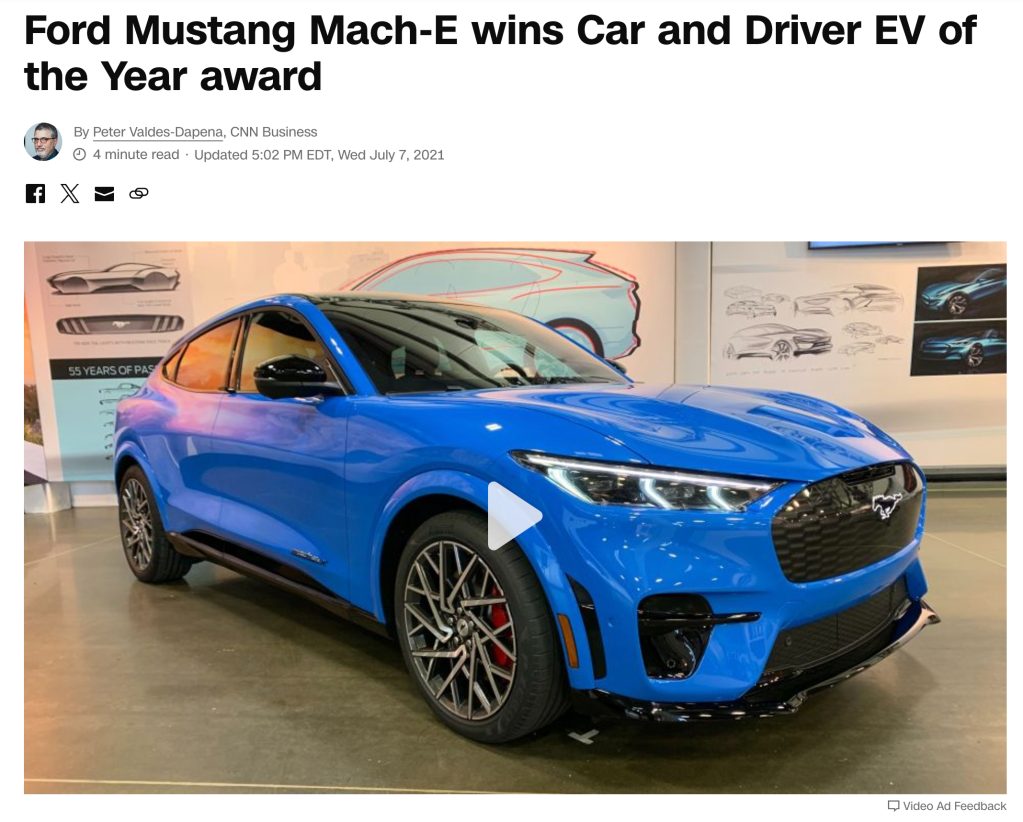
If I had been ready to buy then, and was willing to pay $50,000+ for a car after incentives, that’s what I would have bought. But I wasn’t ready. For all the hype and visible momentum, 2021 was still a market for Tesla enthusiasts, luxury buyers, and multi-car households that could manage with a mid-market vehicle featuring 150 miles of range.
Total public charging ports nationally reached nearly 115,000 by year-end. But more than half of the 21,500 DC fast chargers were Tesla Supercharger installations, leaving only 9,000 open to non-Tesla drivers. Other features of that immature EV market included:
- A decade of ultra-low-interest rates had deluded OEMs they could all pursue Tesla’s first-mover approach of entering the market with over-specced and therefore overpriced vehicles, leaving few base options under $50,000 new.
- Most OEMs had considered plug-in hybrids (PHEV) a bridge technology that consumers were no longer interested in buying thanks to Tesla’s success, and were not investing in new models.
- The Bipartisan Infrastructure Law had only just passed, with states getting control of $5 billion in charging infrastructure funding. This federalist approach all but assured we wouldn’t see major highway network gaps start to fill in until 2024.
- The Inflation Reduction Act had yet to replace the previous 30D tax credit regime with a revamped credit, joined by new 45W and 25E credits. Tesla and GM had already lost access to that prior 30D credit upon clearing 200,000 total plug-in sales, and others like Ford, Toyota, and Nissan were not far behind.
- Ford had yet to strike its deal with Tesla for Supercharger network access, opening the floodgates for other OEMs to follow suit.
- Hertz had just started an ill-fated EV acquisition spree, buying up tens of thousands of Teslas, Chevy Bolts, and Polestars for airport rentals. Their decision to unload those vehicles in 2023-2024 would rapidly reshape the used EV market.
A remade EV market
Flash-forward to today. Though EV growth slowed in 2024, the market nonetheless showed continued improvement. I would argue in the US at least, this is the year we finally reached the dawn of our mass-market era.
We’re still a few weeks from getting the full-year data, but total plug-in sales should finish somewhere close to 1.6 million, with BEV models approaching 1.3 million. The ~10% YoY growth rate bucked the meteoric growth we’d witnessed from 2020-2023, but I’d argue it’s remarkable given Tesla appears likely to sell fewer vehicles in the US (and globally) than it did in 2023. Ford and GM will both clear 100,000 plug-in units sold for the first time. Toyota and Kia also saw major EV sales growth, as did Honda (starting from 0).
Leasing exploded thanks to the 45W tax credit, tripling to nearly 43% of total EV retail sales halfway through 2024. Several factors, including the aforementioned Hertz fire sale, have significantly boosted the availability of affordable used EVs. Per Cox Automotive, those used EV sales have averaged roughly 25,000 units monthly from August-November 2024, up more than 60% over 2023 (here’s the November report).
Publicly available charging ports eclipsed 200,000, with more than 40,000 added in 2024 alone. Perhaps more importantly, the DC fast charger count ended the year just shy of 50,000. With every major OEM committing to NACS compatibility*, the DC fast charging network available to all EV drivers has effectively quintupled in just the past three years. *The rollout timing and mechanics vary by OEM, but I’ll cover that in Part 2.
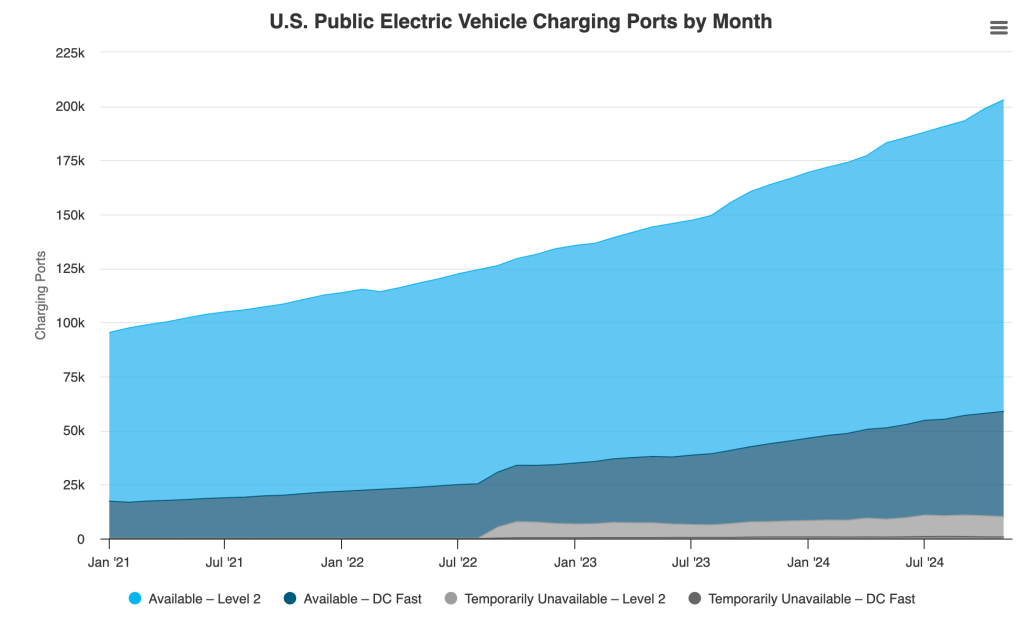
(Source: U.S. Joint Office of Energy and Transportation)
Three years ago, EV buyers outside California were almost exclusively enthusiastic early adopters. The data now show we’re beyond that phase of market development, and moving squarely into mass-market growth. That’s where I find myself, finally, a serious buyer.
From “maybe” to “yes”
I bought my Toyota 4Runner in 2014 with considerably different priorities, and have recognized for several years that my next vehicle would likely be smaller and electric. There just hadn’t been any urgency.
When you only drive ~5000 miles/year (about half of that on long road trips) and own a vehicle with the durability of a Toyota…you can easily convince yourself to postpone any major purchase decisions.
My hesitancy was fundamentally rooted in three factors:
- Price (really, value).
- Availability of charging infrastructure.
- My one very long road trip between Atlanta and Dallas.
The EV market evolution I described since 2021 has addressed the first two concerns. but the third warrants elaboration.
As you can infer from my annual mileage, I don’t drive much. I live in a neighborhood where I can walk to buy groceries, dine out, and take my dog to the dog park. I drive only a few times a week (typically walk, take transit, or Lyft as necessary), and rarely more than 20-30 miles roundtrip in a day.
I tally 50% of my miles annually driving between Atlanta and Dallas (TX) because my dog winters with my parents, an arrangement dating back to my road warrior days in management consulting. She’s almost 11 and in good health, but she’s almost 11. Though I’d love for her to live another decade, the reality is those 800-mile road trips are a shorter-term consideration.
Nonetheless, that single use case is the primary reason I’ve held off on an EV to date, and also the reason I’m considering PHEV options. We discuss this problem frequently in transportation discourse as Americans planning around the “edge cases” in their lives. A certain vehicle may work for you on 99% of trips, but that 1% of exceptional needs may steer you to purchase something else. For others it may be the need to have a third row in that SUV, or a truck bed and towing power.
I make that trip with her twice a year, always in a single day. Even with a few Tesla Superchargers going online recently, the state of charging availability on I-20 in Mississippi and Louisiana is abysmal. Other charging companies such as Electrify America and EV Connect have built their first stations in Jackson, MS and Monroe, LA in the past two years, but I would expect highway charger availability in those two states feels dicey until 2027 or 2028.
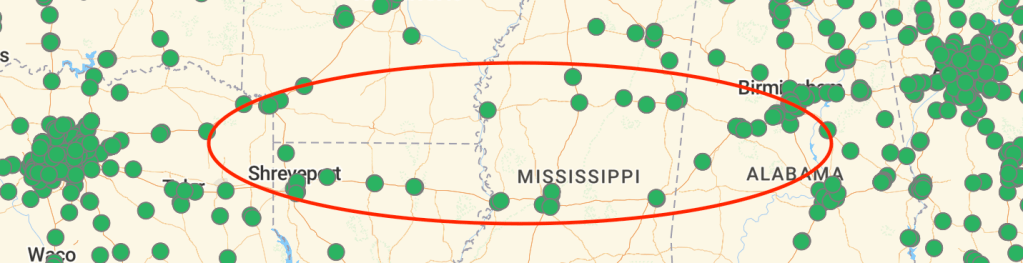
(Source: DOE Alternative Fuels Data Center)
Realistically, if I just rent a gas car for one-way journeys between Dallas and Atlanta for the next few years, I can eliminate the major friction to buying a BEV instead of PHEV. I’ve warmed to the idea, but for the time being continue to evaluate PHEV models.
Under either alternative, I’ve finally grown comfortable with my options. With plenty of models now in my price range, better technology, and a markedly improved infrastructure picture, I’m out of serious reasons to wait any longer.
 Nathaniel Horadam
4 thoughts on “I finally decided to buy an electric car. Here’s what it means for EVs in America (Part 1)”