
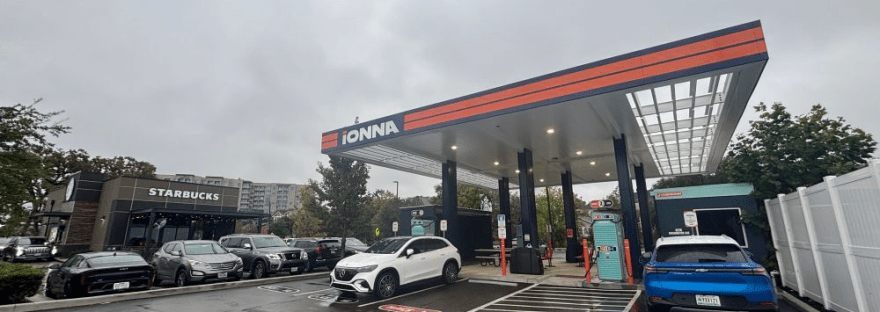
When I resigned from the Department of Energy at the end of October, and decided I’d spend Thanksgiving with my family in Dallas, I knew I finally had an opportunity to do the thing I’d wanted since leasing my Equinox EV in January:
Take that electric vehicle on a major road trip across the Southeast, with no real time constraints or worries about getting stuck somewhere.
Back in August, I detailed my experiences from the spring and summer on shorter road trips from Atlanta. Those trips to Birmingham, Chattanooga, and Augusta were all about two hours from home, and just far enough away that I needed a quick charge to complete the roundtrip journey. But ultimately I was returning to my Level 2 garage charger and didn’t need a full fill up at a public charger.
I jokingly liken those trips to the journeys made by Portuguese explorers down Africa’s Atlantic coast in the 15th Century, building navigation skills and familiarity with the waters ahead before attempting the much longer and more challenging voyage into the Indian Ocean.
So playing a modern Vasco de Gama, I planned – and completed – my own grand adventure covering nearly 2500 miles across the Southeast over a two-week stretch. And I did it in a fashion that would’ve been nearly unthinkable just a couple years ago: without using any Tesla Superchargers. I didn’t even buy an adapter to allow for it!
I tapped into public fast chargers 21 times (technically 22, if you count my lone misfire) across 10 different networks, and paid for nearly 900 kilowatt-hours (kWh) of energy at those stations over 11 hours of charging downtime.
I also watched Heisman runner-up Diego Pavia play his final home game in a Vanderbilt uniform, found a shrine to Tina Turner, saw US Postal Service electric “duck trucks” en route to their new homes for Christmas, and toured the most advanced auto manufacturing plant in North America.
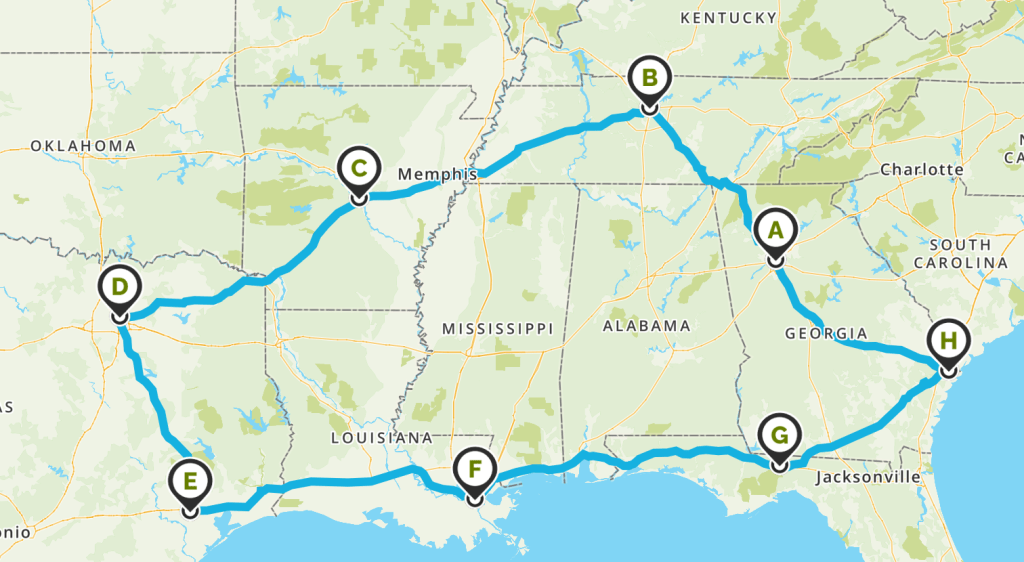
pWhen setting my route, I decided to start with a weekend in Nashville for the football game. From there, I made a two-day journey to Dallas and remained through Thanksgiving weekend. Under normal circumstances, I would’ve made the two-day return trip via I-20 with an overnight stop somewhere in Mississippi. But this sabbatical freed me of my normal time constraints, and allowed me to try out a longer route.
That said, I had an invitation to tour the Hyundai Metaplant on December 4. And as I learned from my time at DOE, you never turn down a factory tour.
So I plotted a four-day haul south to Houston and across I-10, then up through southeast Georgia to the coast. I also planned several meetups with friends along the way, which would impact how I approached charging sessions. Anticipating snafus along the way, I limited each day of travel to roughly five hours of expected travel. The longest single day of driving would be the leg from New Orleans to Tallahassee, nearly 400 miles.
While those fears of charging fails never materialized, my conservative itinerary was a godsend. I ended up with miserable sinus congestion that both complicated my driving and forced me to drink so much water that I needed to stop seemingly every hour.
Charting a course
Because this trip was an exploratory journey, intended to understand the state of charging infrastructure across the Southeast and conduciveness to roadtripping, I approached it differently than one might just traveling from A to B most efficiently.
- I never purchased a NACS DC charging adapter, which GM now sells for $275. Meaning the entire Tesla Supercharger network was off-limits. With only a two-year lease on my Equinox EV, an expectation I wouldn’t often travel far from home, and some preliminary research indicating other networks had built sufficient national footprints, I just didn’t think it worthwhile.
- Level 2 Tesla Destination chargers require a different AC (J1772) adapter, so those were off-limits as well.
- I did some light research to ensure my trip’s feasibility, but didn’t plot specific charging stops in advance. I mostly left that to my vehicle’s navigation system and modified station selections en route as warranted. I occasionally selected the next morning’s first stop the night before, but the only station I selected in advance of the trip was IONNA’s Houston Rechargery.
- I generally prioritized trying different charging networks over cost, speed, or general efficiency. There were a few circumstantial omissions (e.g., Blink, Shell), and I progressively developed preferences that influenced some decisions later in the trip, but I made a genuine effort to diversify where possible.
- GM had gifted me an $80 credit to use on the EVgo network before year-end, so obviously I was going to use that.
This was the result…

While my real-time data collection varied from stop to stop, I attempted to synthesize as much information as I could with notes, photos, email receipts, and readouts from both various charging network and the Chevy mobile apps.
I’ve provided the summary table of each charging location and session (aside from the Level 2 home charges), but for my detailed table including more information on charging sites, equipment manufacturers, charge speeds, and payment mechanisms, I’ve provided my full data table in the Google Sheet file linked here.
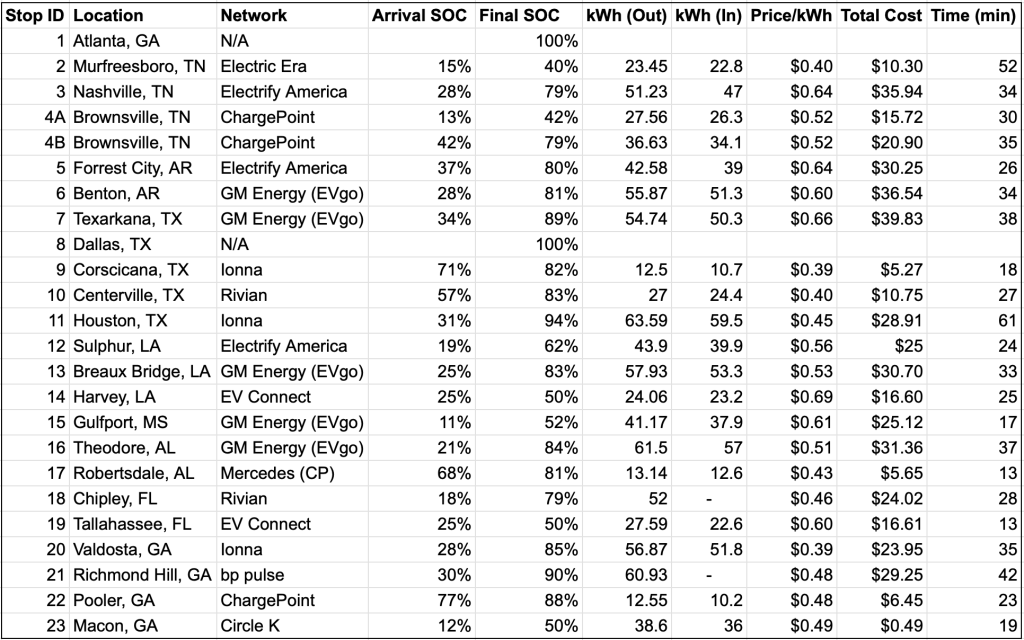
Some notes on the table above:
- Most chargers displayed my vehicle’s state of charge (SOC) while a session was active, but readings occasionally slightly differed from my Equinox’s display. I used both in my data aggregation after the fact, so those readings may vary +/- 1%.
- Charging efficiency and losses vary, but can be influenced by charge speed and outdoor temperatures. “kWh (Out)” was the total energy dispensed by chargers, while “kWh (In)” was the total energy received by my battery. Recent innovations have improved efficiencies, but I still lost about 8% of the energy purchased.
- The Chipley, FL and Richmond Hill, GA charges failed to register in my Chevy app, so I don’t know the exact energy received by my battery from those sessions.
- The ChargePoint unit in Brownsville, TN hit an error and disconnected about halfway through my planned charge, so I recorded the second (successful) attempt separately.
- The $.49 session charge at #23 is not a typo. Circle K botched the metering/billing to my benefit, saving me probably close to $20.
- While not included in this summary, I did note in my more detailed table how I initiated each charging session. All chargers had a credit card tap/insert capability, but I used apps for several networks, and then Chevy has “plug and charge” integration with several networks. In other words, you can start a session by doing nothing but plugging in. That capability worked for EVgo and IONNA (once I eventually registered with the network). I could not get it to work for either EV Connect or ChargePoint, despite activating both.
- The detailed table also distinguishes between Energy Cost (kWh (Out) * Price/kWh) and Total Cost, as a) states and cities begin to assess different tax rates on charging, and b) networks may levy flat session fees or idle fees if a dispenser remains plugged in after a session ends (with a grace period). I don’t believe I accrued any idle fees.
Short of a full play-by-play, I decided to showcase some of the more illustrative charging experiences along the way.
The Journey
Your mileage (and charge speed) may vary – November 21
I kicked off my trip from Atlanta on a Friday with a fully-charged battery and no real rush to reach Nashville. I had a meeting with an energy industry friend around lunchtime in Chattanooga, but beyond that
Per a suggestion (from LinkedIn of all places), I stopped at Middle Tennessee Electric Co-Op’s office in Murfreesboro for my first public charging session of the trip. It was an Electric Era station, and also the most disappointing stop of my entire trip. The 200 kW charger I used never cleared 30 kW, and averaged closer to 25 kW. At least it was cheap at $.39/kWh and the office had public bathrooms.

A Cadillac Lyriq was already charging when I arrived, and two Ford Mach-Es showed up later. I looked at their charger displays and saw rates between 70-90 kW. Had I been more pressed for time, I would’ve ended my session after a few minutes to try a different dispenser, but instead just waited out the slog from 15% to 40%.*
Without ending and starting a new session or testing another dispenser, I can’t say whether the problem was with that unit specifically or my Equinox’s interface with the charger software, but the other vehicles there didn’t seem to have a problem.
*Whenever I use [x]%, I’m referring to my battery’s state of charge (SOC).
Getting my kicks on Route (I-40) – November 23
Route 66 once featured all sorts of wacky roadside attractions to draw in roadtrippers, an artifact of American 20th Century motorist culture. The creation of a limited-access highway network, the Interstate Highway System, all but killed it and other corridors like it. We’re now left with ugly clusters of gas stations, fast food joints, and cheap hotels with value dictated by Interstate proximity for ease and speed of stops.
But if you need to stop for 30-60 minutes for an EV charge, that opens opportunities for more novelty beyond just stopping for a safe recharge, bathroom break, and snack. I finally experienced the art of possible in Brownsville, TN, just east of Memphis, when my Chevy navigation directed me to a ChargePoint station at the West Tennessee Delta Heritage Center with 13% remaining.
Coincidentally, this was also the site of my sole charging session that ended prematurely with an error. I lost 15 minutes to that issue, which I didn’t notice until I pulled up the ChargePoint app and saw charging had stopped. My second attempt went smoother, and in all I spent about 80 minutes stopped there with the 125 kW charger, which hovered just under 60 kW for both sessions. That charge up to 79% was my longest pit stop of the entire trip.
But none of that mattered, because I soon learned the Heritage Center featured multiple cultural exhibits and a Tina Turner museum. And let me just say…it was wild. Between a couple bathroom breaks, grabbing a free cup of coffee, and the multiple museum features, I was able to keep myself busy for an hour. Apparently the place is a bona fide pilgrimage site for Turner’s enduring global fanbase.
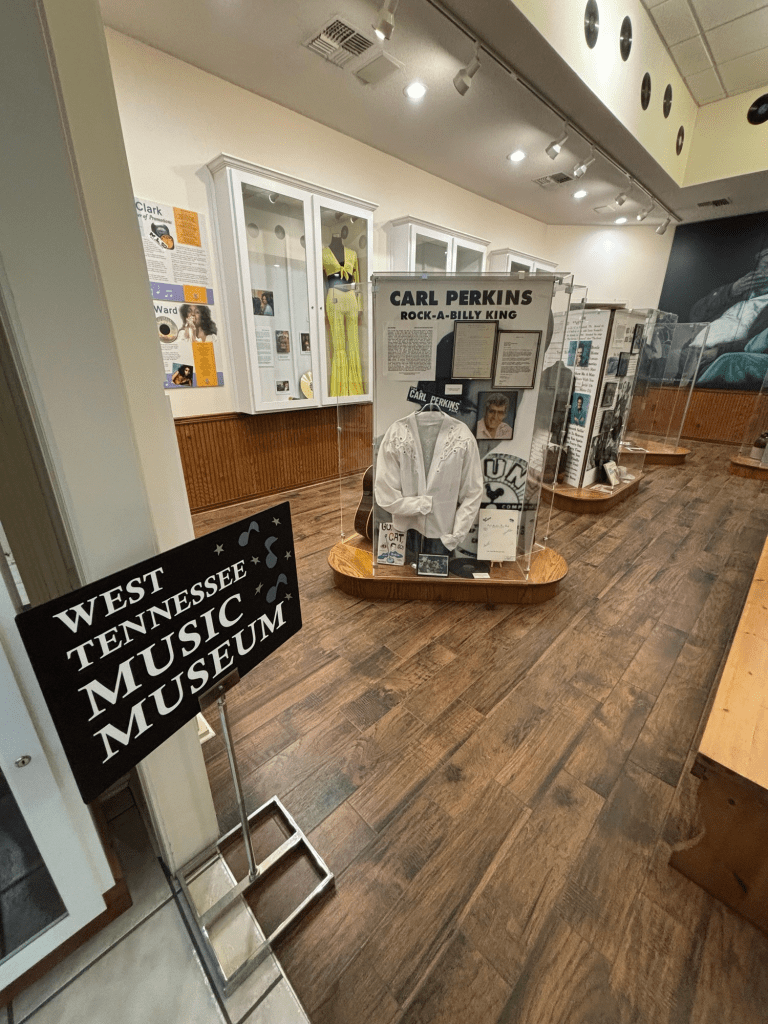

Just about 25 miles east in Jackson, the Casey Jones Home & Railroad Museum also has a Tesla Supercharger on site. An EV driver is unlikely to charge at both stations, but optionality isn’t a bad thing. I don’t think I’d ever pulled off the highway on whim for a roadside attraction before, and while not a Tina “fan” per se, I appreciated the unique experience while waiting on a recharge. Provided these sites ultimately offer competitive DC fast charging and proper pit stop amenities, I could see a revived network of roadside attractions.
Houston, we have a problem – November 30
I’ve driven to Houston three times in my life, once in each car I’ve owned or leased. The first two times resulted in vehicle damage from unavoidable road debris. Third time was not the charm.
Due to a wreck on I-45, Google Maps had me detour to TX-75 shortly after my IONNA pit stop in Corsicana. I stuck to the state highway for a bit, where I discovered EV acceleration is also quite useful for passing cars on two-lane roads. I needed another bathroom break as I approached Centerville, and saw a Rivian Adventure Network station on the map so pulled off there at 53%. The chargers were next to a Tesla Supercharger installation, behind Woody’s Smokehouse near the dumpsters and loading area.
First off, I was blown away at the site activity. At one point there was a line four Teslas deep to use the Supercharger dispensers. A total of three Rivian vehicles and one F-150 Lightning hooked up to Rivian dispensers in the less than 30 minutes I was there. It’s one thing to read statistics on Texas’ rapid EV adoption, it’s wholly another to see California-level traffic at its charging stations.
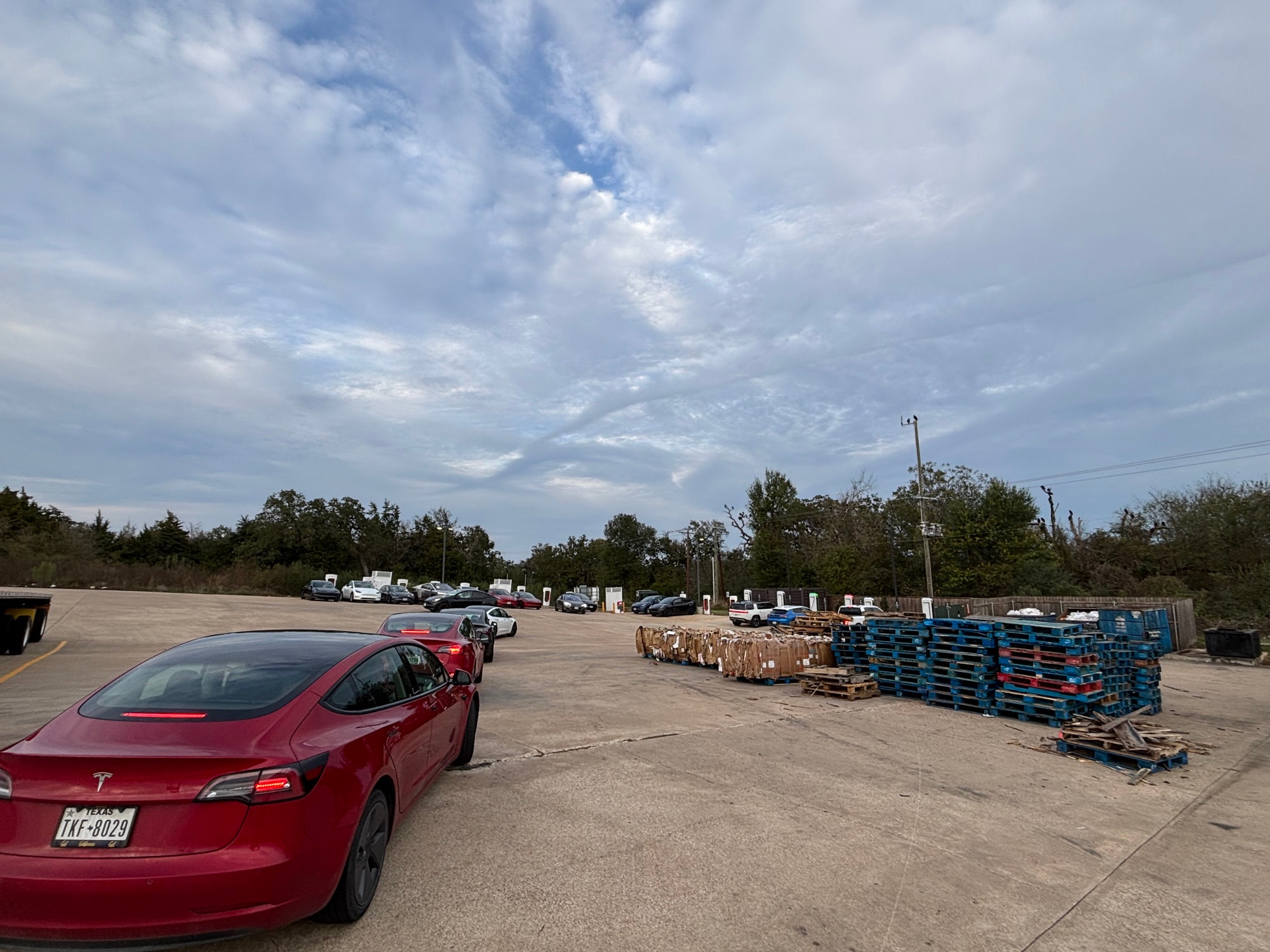


Second, my session was fine, and the price of $.40/kWh was among the lowest I found on the trip, but wish I’d gotten a faster charge. Picking up 24 kWh (up to 83%) in just under 30 minutes wasn’t great, especially since I only peaked at 73 kW. I had better luck with the next Rivian charger I used.
Unfortunately, I suspect this is also where I picked up metal scrap in my right rear tire. I didn’t get any sensor readings or warnings until I hit stop-and-go traffic about 150 miles later near Downtown Houston. At that point, my tire pressure started dropping rapidly. I pulled off the highway to visually inspect it, saw the foreign object and puncture, and then quickly drove off to meet my friends for dinner about 15 miles away (knowing the pressure would stabilize until I stopped again).

A call to AAA after dinner and a tow to a 24-hour tire shop ended up setting me back less than 90 minutes, but the replacement tire was a cheapie and the original was not. I’m happy it only cost me $95 on the spot, but I assume I’ll need to spend several hundred dollars on a proper replacement before my lease term is up in a year.
I probably should just avoid Houston in the future.
I’ll blame this incident poor site design by the property owner and charging networks. I guarantee the Shell gas station out front didn’t have sharp debris lying around it. Of the 21 public chargers I visited, the other 20 were in thoughtfully planned and cleared areas on their respective premises. EV station developers have gotten better about station design, but many sites still have chargers shoved wherever there was room at the time (and proximity to electrical infrastructure).
Not so breezy in the Big Easy – December 1-2
Over the course of my journey, I only once felt anything resembling “range anxiety” — concern about reaching a charger before depleting the battery. In this instance, I didn’t actually fear getting stranded; I just recognized I’d made a mistake and my next charging options were not great.
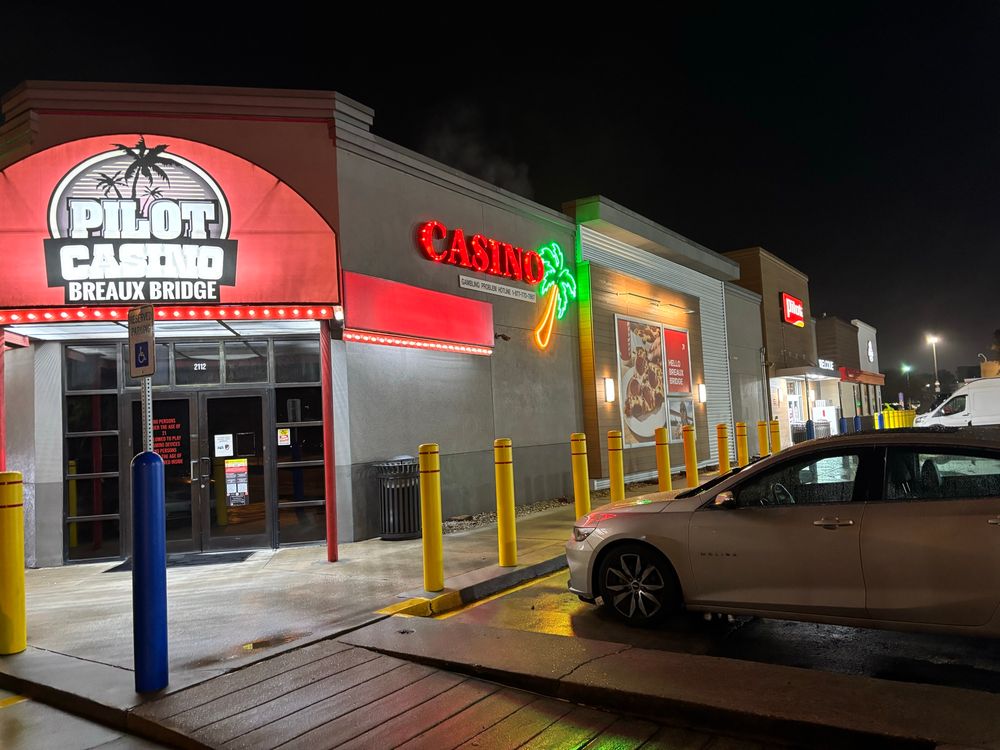
About 125 miles from New Orleans, I stopped in Breaux Bridge for what I planned on being my final charging session of the day. It was already dark, I was tired, and I saw there was a Rivian station ~30 miles east of New Orleans in Slidell. So I figured if I cleared 80%, I had enough juice to hit that Rivian station the next morning.
nI nixed my navigation’s direction to Walmart’s Electrify America station because Pilot’s* EVgo station was slightly closer to the I-10 exit, but the site definitely felt a bit sketchy at night. Of course being in Louisiana, it also had a casino. EVgo got the job done though, bringing me from 25% to 83% in half an hour minutes, with an average charge rate just under 100 kW.
*At least one of the Pilot stations I visited was under the Flying J brand. For ease I’m just going to refer to all of the company’s stations by the Pilot brand.

I pulled into New Orleans with just under 30%, checked into my Garden District hotel, and then did what one does when visiting New Orleans in December – headed straight to the Roosevelt Hotel. My sinus situation kept me from enjoying a drink in the Sazerac Room, but the hotel’s Christmas lights display is always a pleasure.

That night at dinner, however, I realized my mistake. That particular Rivian charging station in Slidell was open to Rivian vehicles only, and I wouldn’t be able to use it at all. The Tesla Superchargers in New Orleans and Slidell were also off-limits without a NACS adapter. After some research, I found I had three options:
- Head northwest (i.e., backwards) about 40 miles the following morning to hit an Electrify America charger.
- Detour to an EV Connect station at a Chevy dealership across the river in Harvey the following morning, and hope one of the two 120 kW dispensers was open.
- Find one of the non-Tesla Level 2 destination chargers scattered around the city, leave my car overnight, and hope for the best.
I opted for #2, and reached the station the next morning around 8:30. It was already busy when I arrived, and the queue would only grow. Two Bolts and a Niro were charging on arrival, and two more Niros eventually pulled up (and fought over my spot when I left). From appearances, this looked to be a popular spot with ridehail drivers lacking home charging or Tesla network access.

All in all, not a great experience. I started charging from the 120 kW ABB unit’s second dispenser despite the mobile app repeatedly giving error messages indicating it couldn’t initiate the charge. With a Bolt hooked up next to me, I averaged around 55 kW. After 25 minutes and 23 kWh (up to 50%), I felt confident I could make it to the next station in Gulfport and left. That was the most expensive charger I used on the entire trip at $.69/kWh, and am surprised it’s even worthwhile for those Uber/Lyft drivers.
Moral of the story – either do better research, ensure you can charge at Tesla stations, or get cities to build more destination chargers in tourist areas with lots of hotels. I wrote about the latter in my August post, after running into similar issues overnight in Birmingham. The solution there? Another car dealership.
Stutter steps – December 2
No surprise that my day trekking from New Orleans to Tallahassee also featured my most plug-ins at five. My morning was constrained by an early lunch commitment in Biloxi, so I limited my charging sessions in Harvey and Gulfport to just what I needed to reach Mobile. Seventeen minutes at a Pilot (EVgo) in Gulfport got me from 11% to 50%, as well as a desperately needed bathroom break. That was also my fastest confirmed charge of the trip, averaging 126 kW.
After lunch, my next stop at yet another Pilot (EVgo) outside Mobile would feature a longer charge to 83% (+57 kWh) over 37 minutes. While I knew it wasn’t sufficient to reach the final longer charge I’d need before Tallahassee, I’d also seen enough of the Equinox’s charging curve to know I was better off making a quick pit stop than trying to clear 90%.
I am not the world’s biggest Buc-ee’s fan. You might even say I actively dislike the place. My prior couple of visits to the Calhoun, GA location have been nightmarish due to the crush of visitors and time required to get in and out. No bathrooms are nice enough to warrant cars backed up onto Interstate exit ramps. No beef jerky is worth long checkout lines full of people loading up on tchotchkes and kolaches.
But I saw a Mercedes-Benz charging station just ahead of at the Buc-ee’s in Robertsdale, AL, and decided to bite the bullet. Like GM with EVgo, Mercedes’ network is just the company’s branding on ChargePoint ultrafast chargers at partner destinations. Buc-ee’s also tend to have Tesla Superchargers on site, as this one did.

Presumably because the location is clearly oriented towards Gulf Shores tourists, and we’re well-past beach season, I was in and out quicker than expected. I was the only vehicle charging at the Mercedes station, and there were only two Teslas at the Supercharger. Inside wasn’t busy either. A bathroom break, cup of coffee, bag of teriyaki jerky, and +13% later, I was on the road again.
My navigation had me stopping at a Walmart Electrify America station in Chipley, Florida, but I spotted a Rivian station around the corner at a Tractor Supply Company and pulled in with 18%. At this point in the trip, I now had a general sense of network pricing and knew Rivian’s chargers were $.10-$.20/kWh cheaper than Electrify America’s. I noticed Tesla and Blink also have stations nearby, which is when I realized Chipley is on the most popular route from Atlanta to Panama City Beach.
Solid pricing aside, it was one of my better charging experiences of the trip, picking up 61% in under 30 minutes.
The road less traveled – December 3
In a gas-powered car, this is where one might approach route planning a bit differently. Technically the quickest way to Savannah from Tallahassee involves continuing east on I-10, and then taking I-95 north from Jacksonville. I didn’t do that. Instead I hit an EV Connect charger at a SunStop station on the outskirts of Tallahassee for a quick charge, then took several highways north to Valdosta. After a longer charge to 85% at another IONNA station, I followed US-84 across southeast Georgia into the Savannah region.
Two reasons I opted for the alternate route:
- Increased energy efficiency translates to time and cost savings. EVs boast significant efficiency advantages over (non-hybrid) combustion vehicles at slower speeds, and certainly while idling. But those advantages evaporate while operating continuously at high speeds, as one tends to do on Interstate highways. So I consumed far less energy taking the more direct path at slightly lower speeds.
- More Georgia exposure. Live in the state, work in the sector, and knew I was in for better scenery…so why not?
Taking US-84 was the right choice, and fortunately I had plenty of juice to reach the bp pulse (people…please stop putting proper nouns in all-lowercase) station in Richmond Hill with 30% remaining. There wasn’t much charging infrastructure in between. Several workplace and town center Level 2 installations popped up on Google Maps along the way, as did occasional DC fast chargers at car dealerships, but the only proper high-speed DC charging station I recall seeing was a Circle K outpost in Waycross.
At the bp pulse station, which was in a TA Travel Center off I-95, I saw an early Christmas gift for some lucky coastal city (likely Savannah or Brunswick). A truck carrying three of the new USPS electric “duck” delivery vans was headed toward the Interstate. That wasn’t even the first of them I’d seen transported on this trip. On my first day, I had passed another truckload of three on I-24 northbound into Nashville.
I look forward to seeing these on Atlanta roads!
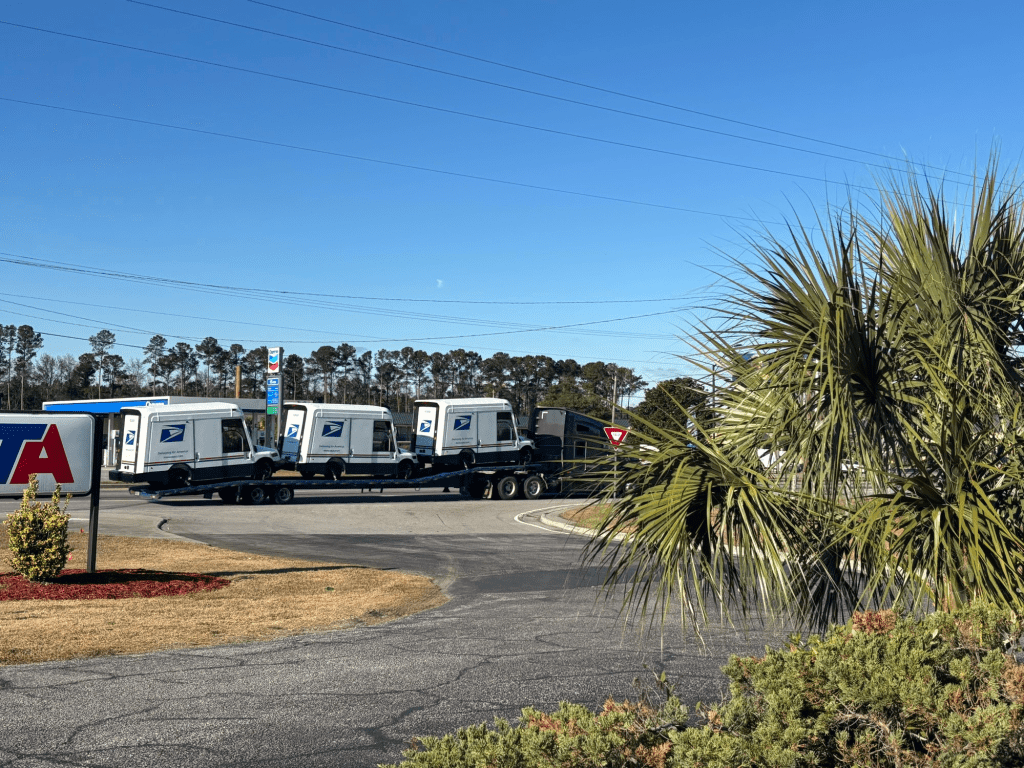
I love these so, so much.
A snapshot of America’s electric future – December 4
Since 2019, I’ve participated in the Georgia EV Braintrust founded by outgoing Georgia Public Service Commissioner Tim Echols. It’s been a great forum for professionals and enthusiasts in the state to keep abreast of industry developments and coordinate advocacy efforts. Commissioner Echols is moving on from leadership of that group following his recent election defeat, but before passing the torch, had helped organize a tour of the Hyundai Metaplant.
After a quick top-up at a slower ChargePoint station en route to ensure I could clear Macon without another stop, I headed to the plant complex.
As I said, never pass up a factory tour. I only regret we couldn’t take photos inside the facilities.
I recognize humanoid robotics are all the rage now with the Silicon Valley set, but the advances we’re seeing in non-humanoid robotics are impressive and frankly far more impactful. And they were everywhere on the factory floor. Including those creepy robot dogs (Hyundai bought Boston Dynamics), used to scan parts as part of the quality assurance process. When Hyundai boasts of operating the most advanced manufacturing facility in North America, and on par with those in China, I buy it.
I left straight from the plant back to Atlanta, needing just that one last charge to make it home. I’ll note there still isn’t much in the way of (non-Tesla) charging infrastructure on I-16 from the Savannah metro area until you reach Macon. I saw a couple Red E stations along the way, but both a ways off the Interstate near town centers, and some older/slower DC chargers.
That was it at the time, but changes are afoot. I-16 was one of the gaps targeted in Georgia’s first round of National Electric Vehicle Infrastructure (NEVI) Program awards. As I understand it, the first NEVI-funded Interstate site in Dublin (about 50 miles east of Macon) should be online any day now. I’ll also note that a site in Waycross just received a second round award, about halfway along my route from the day prior.
Because of my morning stop, I was able to clear Macon and stopped at a Circle K on its northern outskirts. As a consumer…phenomenal experience. Went from 12% to 50% in under 20 minutes, and basically got a freebie. As a EV industry guy…less phenomenal. The charger’s software clearly needs some recalibrating, because either it hasn’t yet standardized the decimal separators for our US market, or it erroneously registered 38.6 MWh of output. That should be 38.6 kWh. And in either case, I was charged a whopping $.49 for what should have cost about $20. Hooray for me.

I made it home with just under 20% left in the battery, and plugged into my garage charger. After two weeks, I was finally back to the comfort of my own bed and $.15/kWh charging. Mission accomplished.
The Journey, Revisited
You don’t travel 2500 miles in an EV without learning a few things. About your car, about EV infrastructure, and about the future of our automotive and transportation sectors. Some observations were not too dissimilar from those earlier in the year on my shorter road trips, but obviously this was a much larger sample.
I’ll reiterate I intended this trip as an exploratory endeavor, not a reflection of the generic EV roadtrip.
My trip was far longer, required more stops, and cost quite a bit more than it would have under regular circumstances. Atlanta to Dallas is a little under 1600 miles roundtrip. Leaving each residence with a full battery would probably require 8-10 charging sessions total, compared with the 21 on this excursion.
Including my Level 2 charges in Atlanta and Dallas, I consumed roughly 950 kWh of energy on the trip, paying for closer to 1020 kWh (indoor Level 2 charges incur less energy loss). Were it not for my parents picking up the hit to their residential electricity bill (~$10), GM’s $80 EVgo credit, and Circle K’s billing misfire, I would have spent roughly $500 for all that energy.
In a comparable mid-sized ICE crossover, you’re probably getting 30-35 miles to the gallon, and during my trip, the average price of gas was $2.60-$2.75 in the states my journey covered. Which means a comparable trip in an ICE vehicle would have cost probably somewhere between $200-$230 in gas, or 50%-60% less than my electrons.*
*I’m not factoring in maintenance, depreciation, etc., which would affect the overall calculus. Nor the tire replacement.
EVs of all shapes and sizes
Over the course of the trip, I noted at least 23 different EV models charging either alongside me or at a site-colocated Tesla Supercharger. That included several commercial vehicles.
The proliferation of EV models across nearly every manufacturer selling in the US produced more diversity than I was expecting to see on the trip, though much of it was concentrated in Texas. After New Orleans, I never saw more than one other vehicle charging at a station alongside me.
In Nashville’s Green Hills Mall, two of Waymo’s Jaguar I-Paces were charging when I arrived. Since Waymo’s commercial service in Nashville doesn’t launch until next year, both had safety attendants present to plug in. I assume once they launch, they’ll have charging infrastructure built out at a central operations center (as they do in south Atlanta) to serve those needs.
At the Electrify America station in Sulphur, LA, a Chevy Brightdrop van was charging when I arrived. The van was unmarked, so I couldn’t determine the operator. The next day in Theodore, AL, I pulled into the Pilot EVgo station to find a Siemens-branded Equinox EV charging there.
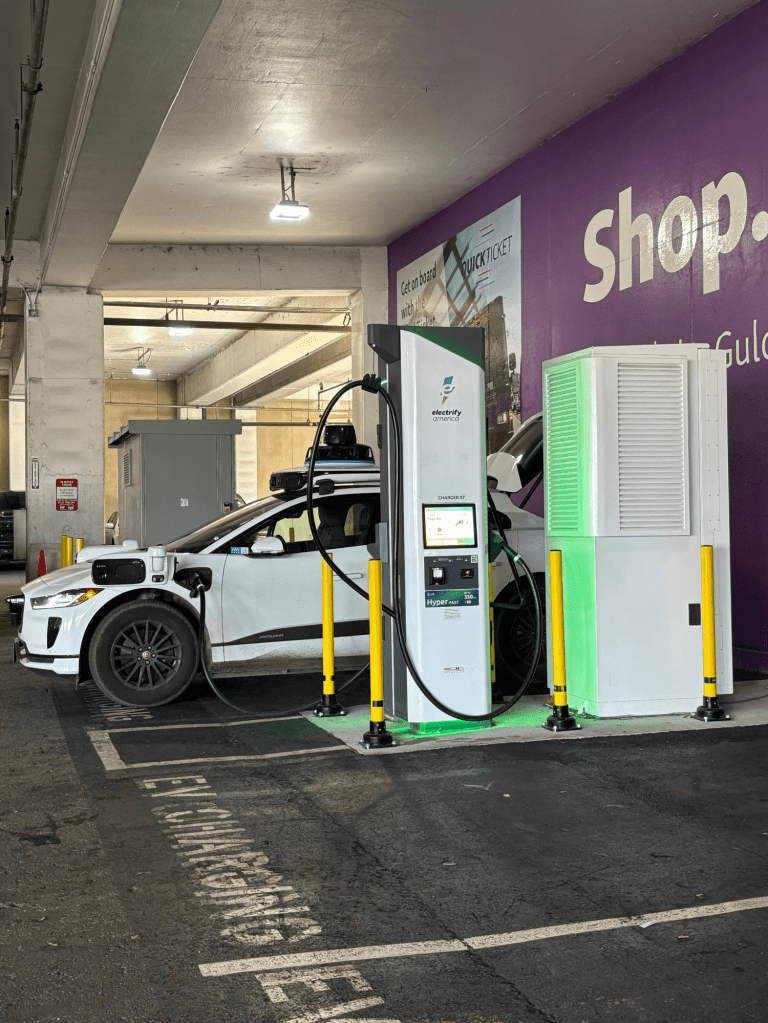

Waymo using public chargers prior to formally launching operations was unsurprising, but I found the Brightdrop and Equinox EV fleet vehicles using public fast charging a bit odd. Unless they subscribe to those networks and get discounted pricing, those sessions would have run more than $.50/kWh. Even discounted via subscription pricing, it’s probably 3-4 times more expensive than overnight Level 2 charging.
How far does a 85 kWh battery actually go?
That nameplate 285 miles of expected range in an Equinox EV certainly didn’t pan out. My napkin math showed I was suffering about 20% efficiency loss, with a true range between 220-230 miles. Which in practice meant (bathroom breaks notwithstanding) I could cover 160-200 miles in between each stop, depending on my starting and ending states of charge. Why?
- The weather clearly impacted my energy consumption, range, and charging needs. Energy efficiency typically starts to decline once temperatures dip into the low 50s, with more extreme declines approaching or dipping below freezing temperatures due to various impacts on drive systems. And that’s before accounting for cabin heating, though the addition of heat pumps has meaningfully helped mitigate those energy and range impacts. (The Equinox EV has one.)
- More than 80% of my miles were on Interstates, where I typically traveled between 75-80 mph. While all vehicles suffer energy efficiency losses at higher speeds, those losses are more noticeable in an EV. Americans (myself included) naturally recoil when experts tell them to “keep it below 70” for maximizing EV range, so range reduction from the advertised figure just needs to be a base assumption for a trip like this.
The only day I saw anything close to “expected range” was my leg from Tallahassee to Savannah, for those reasons. I was cruising between 60-70 mph on US highways and temperatures rose into the mid-high 50s.
Charging an Equinox EV
GM has taken quite a bit of flak for ditching Apple CarPlay and pushing drivers to its own proprietary infotainment software. I’ve rented enough vehicles with CarPlay to deem it overrated, and think GM’s user interface is perfectly fine.
The Google Maps-based navigation did a great job identifying and directing me towards available charging stations. I also appreciated the impressively accurate mapping of charging station locations within a property. In other words, the navigation directed me to a specific location in those parking lots. Especially helpful when charging on premises as large as Walmart’s!
The general routing logic ensured I would not arrive at the next charger with less than 10% or a final destination with less than 30%. These were per range estimates, and varied with my actual drive efficiency. If I nixed a charging stop and failed the system’s routing logic for state of charge, the navigation would prompt me with viable alternatives.
I did notice a prioritization of Electrify America and EVgo locations, even in cases where those weren’t the fastest route options. Users can set charging network preferences, though I left my settings at the default for this trip. Because I wanted to diversify my network usage for this trip, I ultimately made quite a few manual switches from the auto-selected stops.
Navigation systems don’t plan for variance in charger performance, so that part can still feel like a crapshoot. The battery’s charge curve can vary across sessions, though appeared consistent within networks and is designed to throttle down as state of charge increases.
Here are sample dashboards from EVgo (Benton, AR), IONNA (Valdosta, GA), and ChargePoint (Robertsdale, AL), respectively. The EVgo and IONNA sessions were nearly identical, starting at 28% and finishing between 80%-85%, with similar rate peaks (~155 kW) and averages (~89.5 kW). The ChargePoint (Mercedes-Benz network) session started at 68%, so peaked well below the other two at a rate of 80.6 kW and averaged 65.7 kW.


Moral of the story, charging above 70% quickly becomes a slog and it’s not really worthwhile to clear 80% unless either necessary to reach the next charger or you have time to kill.
Finally, I appreciated that my navigation system would automatically update expected state of charge for the next destination during charging. For instance, if I was charging and my vehicle was projecting a -30% state of charge at the next stop on my route, that number would update as charging progressed.
On the state of EV infrastructure
My long-time concern about going electric was the state of infrastructure on I-20 between Atlanta and Dallas, so I found it a bit ironic that I completed this trip without touching that highway. Next time.
I won’t pretend everything was hunky dory on the routes I covered — obviously I’ve already highlighted some gaps and challenges — but I was generally impressed with the coverage from high-quality networks. Occasionally I saw a dispenser out of service, but never more than one at any given station.
At no point did I ever say to myself, “gosh this really sucks.” And I never worried I might get stranded, with sufficient redundancy in the event I encountered a complete dud of a station. Real network gaps feel increasingly rare, and are easily manageable with even a modicum of planning. I was happy to see that Pilot is even now modifying its logo Interstate exit signs to advertise EV charging.
My final count among the 21 chargers visited:
- EVgo – 5
- Electrify America – 3
- IONNA – 3
- ChargePoint (incl. Mercedes) – 3
- Rivian – 2
- EV Connect – 2
- bp pulse – 1
- Circle K – 1
- Electric Era – 1
Given the small sample sizes, I don’t want to make broad generalizations about any network. I did develop preferences by the end, and in a more trip-optimizing mindset may have even subscribed to one of the networks for discounted pricing.
Electrify America and EVgo were regularly among the most expensive on a per-kWh basis, but proved the most reliable charging experiences. I didn’t love trekking to Walmart for Electrify America, given those are sometimes well off the Interstate. IONNA and Rivian were regularly the cheapest, though I didn’t track peak vs. off-peak sessions, as time-of-day typically impacts pricing.
I had truly poor experiences only with a handful — Electric Era in Murfreesboro, TN (slow charge), ChargePoint in Brownsville, TN (mid-session error), EV Connect in Harvey, LA (app issues, expensive, lower-power unit). I regret not trying another dispenser at the Electric Era station just to see if it was a malfunctioning unit or a broader “handshake” issue between my vehicle and their charger’s software. And then there was the flat tire in Centerville, for which I guess I’ll blame Woody’s Smokehouse for allowing chargers near its dumpsters.
I also started to pick up on the different hardware in use by the networks, and could generally tell the newer from the older. All but a few of the stations I visited were clearly deployments in just the past few years. Some of the ChargePoint and EV Connect units were noticeably older.
On the newer side…I made an effort to stop at the IONNA Rechargery in Houston, having seen so much press on the network over the past year. IONNA is the charging joint venture of now eight different OEMs, kicked into gear after years of complaints about inadequate infrastructure and their corresponding drag on EV demand.
With plenty of time to kill before heading to the Woodlands for a lunch meeting, I spent an hour charging up to 94%. The $.45/kWh price didn’t hurt. And from my limited exposure, it looked to be a popular charging destination. At various points over an hour I was joined by a Mercedes EQE, Hyundai Ioniq 9, Ford Mustang Mach-E, Kia Niro EV, Kia EV6, Chevy Equinox EV, and Rivian R1T.

The Southeast is still not far enough along on EV adoption to where any site felt at risk of not having chargers available on arrival, with the exception of that New Orleans EV Connect station. Texas was a different story, with both the Houston IONNA and Centerville Rivian stations nearly at capacity.
Infrastructure developers are also clearly getting smarter about station design. The dual-dispenser units offer some flexibility, assuming available spaces, for vehicles with charging ports in different locations. Pilot’s EVgo stations either feature pull-through stalls like their gas counterparts, or have a striped buffer between spaces to allow for different parking configurations and ease of connection.
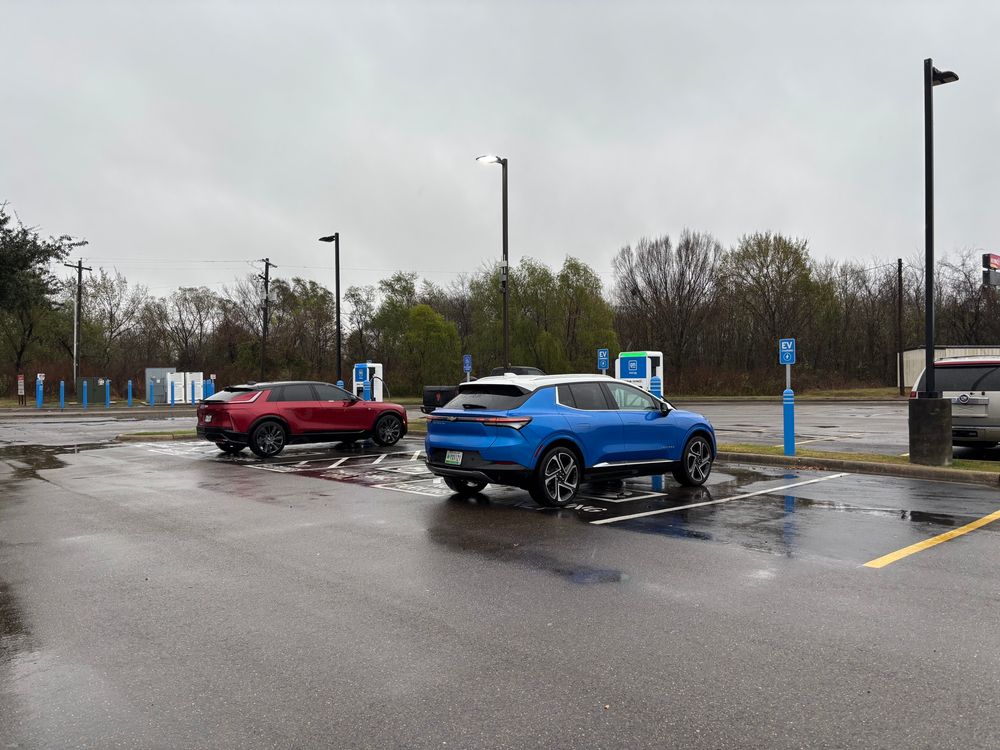
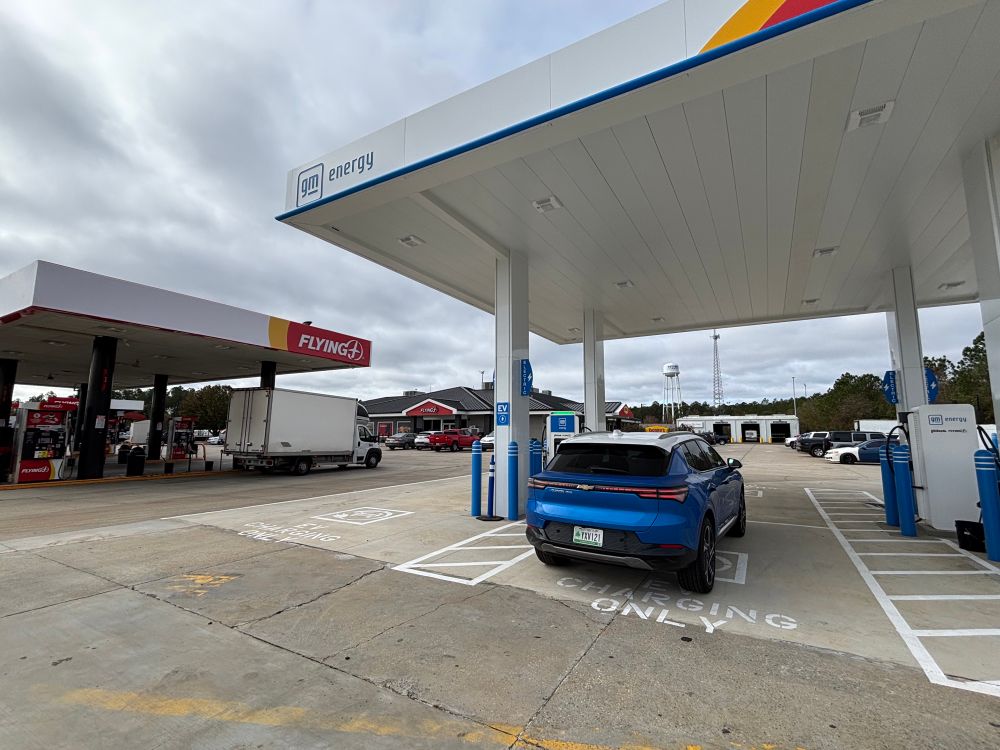
Contrast with the SunStop’s EV Connect station in Tallahassee, which featured single-dispenser chargers tailored to EVs with front-right or (backing in) rear-left ports. My first attempt to start a session failed because the cord stretched too far and couldn’t securely connect to my port. I had to pull up nearly all the way forward to connect successfully, and still had to contort the dispenser. The alternative is intruding in a neighboring space.

While some pundits have tried to typecast the “ideal” EV roadtrip stop, the truth is there is none. I developed an appreciation for the diversity of station sites over the course of the trip.
Need a pharmacy? I did at one point. You’ll find Electrify America mostly at Walmart.
Want the fastest detour off an Interstate? Those Pilot EVgo stations are typically right next to the exit. So are Circle K, bp pulse, and other traditional service stations.
Craving Buc-ee’s, its bathrooms, and its middling brisket sandwiches? The Mercedes (or Tesla) network is there for you.
Open to half an hour at a museum? I’m sure you’ll be able to optimize for that in the not-too-distant-future, but for now maybe your navigation will throw one your way.
Final thoughts
The EV roadtrip experience likely looks radically different than it would have even 3 years ago, especially along the route I charted for this trip. That’s a testament to improvements both in charging networks and in EV technologies that boost charging efficacy and streamline network access.
Are there still gaps in the network? Yes. Are chargers the perfect possible version of themselves? Not yet. Is every EV on the market today equally conducive to roadtripping? Definitely not.
But whatever fears I had a year ago about not being able to complete a long roadtrip without extreme hardship, especially without Tesla network access…those are long gone. Here are a few final recommendations for EV buyers and industry folks:
- Most families in America own more than one car, and for the foreseeable future may want to keep a gas car for longer-distance driving. Those that want an EV to carry them those distances should definitely look into vehicles with higher-voltage architectures. The Chevy Equinox EV technically uses a 400V architecture but operates more like a 300V, which effectively caps its charge rate at 150 kW. That’s absolutely serviceable, but far from state-of-the-art. While larger battery packs may eliminate a few charging stops, opting for an 800V vehicle capable of 200-300 kW charging would have probably halved my downtime.
- You don’t need a NACS (Tesla) adapter, but it can certainly help.
- Hotel districts need non-Tesla Level 2 charging lots. I parked on city streets for basically nothing during the trip, but would have readily paid $20 for overnight parking if I knew I’d get 50 kWh and start the next morning with a nearly-full battery. Infrastructure upgrades for Level 2 chargers are not overly burdensome.
- There’s really no reason for town centers in rural counties to have those destination chargers as tourist draws. Picking up a few kWh during lunch really isn’t worth the time or effort. DC fast chargers or bust.
- Google Maps should catalogue EV charging stations by features/amenities (sightseeing, bathrooms, lattes, pharmacy, etc.) and enable its AI assistant to recommend stops when asked.
And with that, I’ll wish everyone a wonderful holiday season and a Happy New Year. Here’s to more forward progress in 2026.
 Nathaniel Horadam
1 thought on “Two weeks, 2500 miles, and 21 public charging sessions. Here’s what I’ve learned about EV road tripping through the Southeast”